Pilgrimage to Rome.
1-5 March, 2027.
Introduction
The Christian elements of Trolldom history in Scandinavia are often conveniently neglected by modern Western educated people, despite 500 years being catholic countries. In the literary traditional education, often based on Protestant views, it is said that Trolldom and Christianity stand on opposite sides.
Fanatism and separation such as that has never been a part of our folktradition and today, as in the past millenias, people include that which works in practicality and that which is of value to their soul.
Like all oral traditions, Scandinavian Trolldom was influenced by and moved with its contemporary context. In Old Norse myth, rituals, folklore and traditional practices we find the very same content as in those labeled Orphic, Dionysian, Gnostic, Neoplatonic, Hermetic, Christian and Mystic and we find the very same content in our herbal, mineral and material magic as those described by medicinal compilations of ancient times.
The purpose of the pilgrimage
In modern times and modern myth there is a great apparent rift between the practices found within Christianity and that found in older spiritual practices, such as that lumped up under terms like “witchcraft”, “shamanism” and “Pagan/Heathen”. We will travel to the heart of the Christian movement and church to unravel the people and places behind it, to cut through the stories we have about the Christian traditions and practices, to see the Myth and it´s use as a spiritual training tool and to connect for the practices and spirits of the ancestors of this tradition.
The second purpose is to connect to the ancestors of “magic” and “spiritual wisdom practices” housed beyond the confinements of modern Nations and National myths.To get closer to the context in which this was created, the spirits of the people who founded, formed and built this, and to experience it with our own senses and perception at the very heart and foundation.
The Journey & Travel company
The pilgrimage is open to beginners and seasoned practitioners alike. Beginners can, if they wish, be assigned a mentor out of the more experienced practitioners participating in the pilgrimage. If you are a beginner, be mindful that this is not a regular tourist visit and be respectful of the practices encountered. You will be travelling alongside modern practitioners, using the abilities brought on by the practices in order to see and connect to the spirit world surrounding Rome and the locations we will visit.
Preparations
Prior to and during the journey you will be given suggestions of preparations: Bön (Prayers), Lectio Divina contemplations, reading suggestions, dreams work and instructions of the same nature as those used by the people in whose footsteps we will walk.
On location you will be given handouts with added historical information, suggestions relating to the locations to be used as basis for spirit travel or reaching out to connect with ancestors and befriend them, Lectio Divina suggestions and topics for Uteseita.


PILGRIMAGE MAIN ITINERARY
March 1-5, 2027.
Day 1 - “Christianity, Saints & Sinners".
09.00 Gathering in the lobby of Hotel near the Pantheon & Piazza Navona (Details to be provided to those who sign up).
Greeting all pilgrims. Introduction to the week.
Morning Lecture on the topic of our first two days: Short intro to the history of Christianity and the church, the main architects of doctrines and creeds and interpreters of the Christian myth (The Apostle Paul, Saint Augustin, Saint Thomas of Aquinas & Saint Gregory I). The usages and inclusions of Christian myth in Trolldom.
Handouts will be provided for each day containing lecture deepening, historical information on the site and people of interest and the suggested on-site practical work: Trolldom spirit work, prayers, mindrooms, Lectio Divina contemplation practices and Trollritt (spirit travel) destinations.
10.30 Departure for the Lateran church. “The Major Papal, Patriarchal and Roman Archbasilica, Metropolitan and Primatial Cathedral of the Most Holy Savior and Saints John the Baptist and the Evangelist in Lateran, Mother and Head of All Churches in Rome and in the World,” commonly known as the “Lateran Basilica” or “Saint John Lateran”.
The crossroads and a focal point for all Christianity of ancient times. The first Basilica and the oldest foundation of the church (not of the myths used but the institution itself).
This is where Emperor Constantine and Pope Sylvester I started in 324 AD, where the Scandinavian Swedes and Danes united under the terms "Vandals" sacked it in 455 AD, from where Pope Gregory launched the missionary journeys to Anglo-Saxon England in 604 AD, where Charlemange celebrates Easter and solidifying the historic, protective alliance between the Frankish Kingdom and the Papacy in 774, where in 1209 AD Saint Francis of Assisi visits Pope Innocent III to request approval for his rule of poverty. The Pope grants it after a mystical dream where the Lateran walls crack, only for Francis to prop up the church with his shoulders, where in 1215 AD The most powerful assembly of the Middle Ages passes sweeping, severe legal structures to prosecute, strip property from, and physically punish heretics, sorcerers, and Cathars which establishes the structural blueprint for the Medieval Inquisition. Where in 1271, Marco Polo, with his father and uncle, visits Pope Gregory X at the Lateran Palace to receive official diplomatic credentials, letters, and holy oil for the Mongol Emperor Kublai Khan. and where Saint Thomas Aquinas are tutored by Albertus Magnus in Aristoteles logic to be weaponized against heresy and pagans.
The Basilica holds the skull relics of Peter and Paul, The Grave of the Magician pope Sylvester II and may other things of interest.
For purposes of dicerning the people and spirits forming the early church and reaching the core of the old institution, this is THE place to be doing it. There will be other suggested themes for practice in the morning lecture and handout.
13.00 Lunch & 20 min transit by taxi.
14.00 The Papal Basilica of Saint Paul Outside the Walls (Basilica Papale di San Paolo fuori le Mura)
Home of the catacomb grave of the Apostle Paul as well as other relics of interest.
Next to it lay one of the one of the oldest Benedictine monasteries that for 1500 years have been a center for the practices called "Lectio Divina".
16.00 End of day.
“Side Quest”:
Those that want can continue to Basilica of Saint Sabina (Latin: Basilica Sanctae Sabinae, Italian: Basilica di Santa Sabina all'Aventino: Home of Thomas of Aquinas and where he wrote “Summa theologica”. Home of The mother church of the Roman Catholic Order of Preachers, better known as the Dominican monastic order.
19.00 Gathering in the lobby of Hotel near the Pantheon & Piazza Navona. Dinner at nearby restaurant.
Day 2 - “Christianity, Saints & Sinners".
09.00 Gathering in the lobby of Hotel near the Pantheon & Piazza Navona.
Morning lecture continuing from Day 1: The main architects of doctrines and creeds and interpreters of the Christian myth (The Apostle Paul, Saint Augustin, Saint Thomas of Aquinas & Saint Gregory I) and the usages and inclusions of Christian myth in Trolldom. Today we will also talk about Saints in general and their role and use in global folk Catholicism and folk magic traditions.
Handouts will be provided for each day containing lecture deepening, historical information on the site and people of interest and the suggested on-site practical work: Trolldom spirit work, prayers, mindrooms, Lectio Divina contemplation practices and Trollritt (spirit travel) destinations.
10.00 Departure for The Basilica of Saint Augustine (Sant'Agostino in Campo Marzio). Home of the Augustinians and grave of Augustine’s mother Santa Monica the only church in Rome that allowed the city’s high-society courtesans (cortigiane oneste) and independent, educated women to sit in the front pews.
Saint Augustine is a formative meeting ground between the old world of Neoplatonics and Gnostics and the hard creeds and doctrines of the church. In him we find the first seeds of Christianity including and using the concepts of the Trinity, the celestial hierarchies of Angels vs Demons, the Apophatic Theology stating that because God is completely beyond human understanding - which was later used to form the idea of an unreachable (by laymen) and separated “supernatural” world and the concept of Sin.
The Basilica is also a good place to contemplate the many Global catholic folk customs and folk magic traditions and the way Saints are included in every day folk magic and prayers. Such as in Santería, Lukumí, Vodou, Candomblé, Umbanda, Curanderismo, Quimbanda, Hoodoo (Rootwork), Palo Mayombe, Espiritismo, Brujería, Albularyo, Benedicaria, Benzedura, Szeptuchy / Szeptunys, Guérisseurs / Barreurs de feu, Remeieres, Ausbeter, Bean Feasas, Fa lu Santuccio / Segnatori and, of course, Trolldom. The ritual practices derive from the historical narratives or the life of Saints and may vary from region to region and from practitioner to practitioner. For example, St Augustine and Santa Monica are often petitioned for family and relationship issues, breaking bad habits, overcoming addictions, success in school and exams
The Basilica also holds stunning samples of art by Caravaggio and Raphael.
12.00 Lunch.
13.00 Visiting the outsides of Palazzo del Sant'Uffizio (Palace of the Holy Office) which used to be the headquarters of the Holy Inquisition. Providing perhaps the best contrast between the main instruction of Christian Myth, magical practices and the actions taken by the political state of the church. A crossroads of sorts, that many practitioners today find to be a difficult one to get pass. Here we will get the chance to sort that out at the very physical heart of it.
14.00 Visiting St. Peters Church, the largest church in the world. Financing this gave spark to the Reformation and birth to the Protestant branch of Christianity. Home to the Apostle and leader of the Apostles: St Peter. Grave site of Pope Gregory I, locations of the papal altar and the famous sculpture “La Pieta” by Michelangelo, home to hundreds of spirits and saints, the focal point for 1,4 billion Catholics and their prayers and thoughts.
We will explore the church then head down to the Vatican Grottoes below, take a peak at the grave of Queen Kristina of Sweden, the “esoteric queen” who abdicated her throne, converted to Catholicism and moved to Rome.
Finally we will stand before the tomb of St Peter and experience what it feels like to stand in the epicenter of Catholic Christianity today, a good place to discern what a “living God” may feel like, pray or perform contemplations (for example on human created deity vs the natural phenomenon of deific” and many more).
16.00/17.00 Formal End of Day
19.00 Gathering in the lobby of Hotel near the Pantheon & Piazza Navona. Dinner at nearby restaurant.
Day 3 — “Magicians, Hermetism, Esotericism & Medicine”
09:00 Gathering in the lobby of Hotel near the Pantheon & Piazza Navona.
Lecture on the philosophical foundations of Western Ceremonial magic, Grimoire magic, Renaissance magic & Hermetism (Marcinio Fincio, Giordiano Bruno, Giovanni Pico Della Mirandolla and more) and their connection to Trolldom (Svartkonstböcker, Wittenbergska präster, the practices of Swedish Nobles and Freemasons). The connection between “medieval medicine” and Trolldom and the influence of Galen, Discord and Pliny on European folk magic.
10:30 Giordano Bruno´s Monument in Campo de' Fiori. We will stand before the bronze statue of the Dominican friar burned alive on this exact spot by the Inquisition in 1600. Bruno adamantly refused to recant his pantheistic belief that the universe was physically infinite—a cosmic expansion built directly on the Neoplatonic foundations laid by Ficino Stand before the brooding bronze statue of the Dominican friar burned alive on this exact spot by the Inquisition in 1600., a theory he developed by devouring the cosmic emanation texts of Plotinus and Iamblichus as translated by Marsilio Ficino.
11.00 Walk Across the Tiber
Passing the Palazzo della Cancelleria, the power seat of Cardinal Raffaele Riario. In 1489, who was instrumental in saving Fincios life.
Then we take a walk crossing the famous Ponte Sant'Angelo (Bridge of Angels) directly toward our next stop.
12:00 Castel Sant'Angelo (Mausoleum of Hadrian).
We will explore the dark Papal prison cells (Le Prigioni) where Giordano Bruno spent the years of his long trial before his execution and where Pico della Mirandola’s life almost ended. These walls held the 17th century “Dynastic Witch” Laura Malipiero as well as Bellezza Orsini (The Herbalist of Sabine). Count Alessandro di Cagliostro, an infamous 18th-century Italian occultist, alchemist, self-styled magician was also imprisoned here. All of which were mirroring the concepts and practices translated and outlined by Ficino and Bruno and carrying the practical legacy of the ancient Neoplatonists and medicinal giants who roamed the city 1800 years earlier.
Before the castle was sacked by Visigoths in the late 400´s, it held the ashes of several Emperors and empresses:
Emperor Hadrian (d. 138 AD) – The builder who commissioned the monument (as well as the Hadrian wall in current day England). His ashes were placed here in 139 AD.
The ashes of the philosopher/Emperor Marcus Aurelius (d. 180AD) who´s book “Meditations” is still a bestseller today. (Those who have seen the movie “Gladiator” might enjoy that this was/is also the place where the emperor Commodus ashes where kept).
The ashes of Emperor Septimius Severus – who ruled the empire guided by astrology and so proficient in "the science of the stars" that he had his exact natal birth chart painted onto the ceiling of his private bedroom and a fake, completely altered astrological chart painted on the walls of the public palace reception rooms to prevent his enemies from reading his stars and predict his death.
The ashes of feuding imperial brothers Caracalla and Geta, who´s childhood tutor and imperial physician, Quintus Serenus Sammonicus, wrote the Liber Medicinalis. In this text, Sammonicus recorded the very first written use of the word "Abracadabra". He instructed that to cure Caracalla, Geta, or other nobles of deadly fevers (malaria), the word had to be written repeatedly on parchment in a descending triangle, shrinking by one letter per line until only the "A" remained, and worn around the neck as a protective magical amulet.
The ashes of the Empress Julia Domna (wife of Severus and mother to Caracalla), a premier patroness of the occult in Rome. She commissioned the writer Philostratus to compose the definitive biography of Apollonius of Tyana (The legendary Pythagorean philosopher, miracle-worker, and magus who was rumored to be able to speak to spirits, vanish into thin air, and forge powerful warding talismans).
Here we will also enjoy the breathtaking view of Rome and the Vatican from the roof top.
13:30 Lunch (If possible at the Café on top of the Castle with its spectacular view over the Vatican).
14:30 From the Castle we take a taxi to the Asceplian temple at Tiber Island (Isola Tiberina). The epicenter of ancient medicine who’s legacy lasted in the west up until modern times.
Gathering at the ancient bridge of Pons Fabricius (built 62 BCE), the oldest original standing bridge in Rome. Short story of the history of the island, how the sacred snake was stolen from the main Asceplian temple of Epidaurus in Greece.
If possible we will walk down to the southern travertine stone tip carved by the Romans to look like the prow of a majestic ship. Locate the 2,000-year-old carved relief of the Staff of Asclepius. This isolation island was the ultimate medical sanctuary where Galen of Pergamon, Discourd and Pliny the Elder catalogued, wrote and studied rare human pathologies and collected wild river herbs—the exact physical practice of "earthly medicine" that Ficino later attempted to align with the stars.
16.00 End of day
19.00 Gathering in the lobby of Hotel near the Pantheon & Piazza Navona. Dinner at nearby restaurant.
Day 4 — “Neoplatonist Theurgic Magic & Hecate, Salome, the Sibyls and the Orphic Matrons”.
09.00 Gathering in the lobby of Hotel near the Pantheon & Piazza Navona.
Lecture on the Neoplatonists Porphry, Plotinos and Iamblicus all taught and practiced in the city (And the female students & the women that housed them). A brief look at Theurgic Magic the older texts of the Greek Magical Papyri and the role of Hecate. Salome & Herodias and their role in Gnostic Christianity as well as in witchcraft, The Sibyls and the Orphic Matrons and how these connect to the practices in Trolldom (from the extensive use of Maktord (Nomina Barbara) to the prophetic role of our Völvas and how Freya & The Valkyries/Maidens/Norns operate in our Northern sagas. The connection between the Orphic, Dionysian & Bacchian mysteries and the Norse sagas via Kvasir & the Mead of Poetry and the similarities between the Christian myth and communion wine and this.
10:30 National Roman Museum Palazzo Massimo alle Terme.
In the basement vault, as you look at the Anna Perenna cursing Dolls and Magic Word Intaglios, connect them to the active practitioners of the Greek Magical Papyri. These are the physical tools of the "night-wanderers", Neoplatonic magicians, theurgists and witches who invoked Hecate, Diana, and (later) Herodias. On the other side of the street are the Diocletian baths, where Porphry and Plotinos met with students.
12:30 Transit & Lunch
14:00 Grove of Stimila, Mithraeum, The Tarpeian Rock & The Sibyline stairs. – A Contemplative afternoon walk.
Gathering at Lungotevere Aventino & Orange Garden
We will walk the slope where the the Grove of Stimula (old Roman goddess of “frenzy”) was located and where Paculla Annia held her nocturnal Bacchic rites and gathered thousands of followers. The activity being very similar to the medieval associations of Salome and Herodias, both were accused by authorities (the Roman Senate and the Catholic Church) of “leading thousands of women into wicked, nighttime rituals under the cover of darkness.”
We will walk past The Mithraeum of the Circus Maximus - Mithraism was a secretive, underground, men-only mystery cult that required initiates to climb through seven celestial spheres to liberate the soul. Neoplatonists—especially Porphyry—wrote a famous philosophical treatise (On the Cave of the Nymphs) interpreting the dark, underground Mithraic temple as a cosmic map of the universe where souls enter and exit the material world.
We will pass The Tarpeian Rock (Capitoline Hill), the famous execution site where, according to the ancient Roman historian Tacitus, during the 1st century CE, multiple high-profile male magicians and practitioners of unauthorized foreign divination (magoi) were arrested under imperial decrees. As a ritualistic purification for the city, these magicians were marched up the Capitoline Hill and thrown off the Tarpeian Rock to their deaths.
Finaly we will reach “The Sibylline Steps” located on the Capitoline Hill where we will c limb the steps to the church marking the legendary site where the local Tiburtine Sibyl delivered her vision of a future king to Emperor Augustus. Behind the square sit the foundations where the secret, state-guarded Sibylline Books were locked in a stone chest under the Temple of Jupiter.
16.00 Program ends here.
Side Quest
Enter the museum next door (fee not included) to view the collection of ancient Roman and Etruscan convex bronze scrying mirrors (speculum). The reverse sides of these rare relics are intricately carved with planetary grids and astrological constellations. They were used by ancient ritualists for catoptromancy (mirror scrying)—the exact ritual art used to capture planetary light to trap spirits, which the Inquisition later banned. Still used of course, in the Trolldom tradition. Also take a look at the bronze statue of Hecate while you are here.
19.00 Gathering for Dinner. Location to be decided.
Day 5 — The Heart of Old Rome: Where Things Come Together.
10.00 Gathering in the lobby of Hotel near the Pantheon & Piazza Navona.
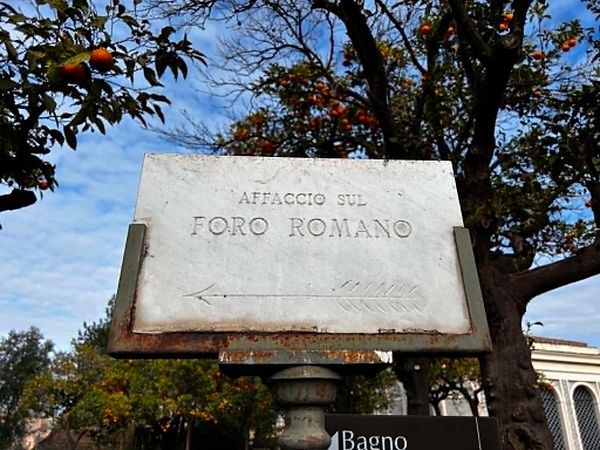
Brief lecture on todays destination – the Forum Romanum and its connections to Trolldom & Scandinavia and suggestions on what to do in terms of spirit summoning, connecting & lectio divina meditation & contemplation.
11.30 Gather at the Forum Romanum entrance.
We will have a formal route inside with a selection of stops relevant for our practices. Those who wish can follow along the selected route or take off on their own and meet up as we go along.
(There are no restaurants of cafes inside the area, so make sure to bring water and be fed before entering.)
Formal route inside Forum Romanum:
The Mamertine Prison (historically known as the Tullianum),
The Tullianum was ancient Rome's only maximum-security dungeon, used to hold high-profile state enemies before their execution: According to Christian tradition, both Apostles Peter & Paul were imprisoned here during the persecutions under Emperor Nero (c. 64–67 AD). Vercingetorix: The heroic king and chieftain of the Arverni tribe who united the Gauls against Julius Caesar was also held prisoner here.
The Navel of Rome
The circular brick ruin of the Umbilicus Urbis (The Navel of the City of Rome). This brick cylinder sat above the Mundus—a sacred, subterranean pit believed to be a literal portal to the underworld. Three times a year, on ominous days known as Mundus patet, the stone seal was removed so citizens could drop offerings to appease the dead.
The temple of Saturn - sits just next to it.
The Execration of Romulus (The Lapis Niger) - This is the Lapis Niger (The Black Stone), marking a legendary shrine. Romans believed it was either the tomb of Romulus or the spot where he was torn to pieces by a furious Senate. Hidden in the subterranean chamber below is Rome's oldest Latin inscription—a terrifying lex sacra declaring that anyone who defiles this underground sanctuary is permanently cursed (sacer) and condemned to the wrath of the underworld gods.
The Chasm of Sacrifice (The Lacus Curtius)- In 362 BCE, a massive, bottomless chasm ripped open right here. Oracles warned it would swallow the city unless Rome sacrificed its greatest asset to the underworld. A brave young soldier named Marcus Curtius realized Rome’s greatest asset was its warrior spirit; he donned full armor, mounted his horse, and leaped headfirst into the abyss. The earth instantly sealed shut over him.
The Regia and the Domus Publica – The house of Julius Caesar and the official state residence reserved for the Pontifex Maximus—the High Priest of Rome, where he spent his last night on March 15, 44 BCE.
The Regia - Located immediately adjacent to the Domus Publica, the Regia built by Rome's second king, Numa Pompilius. The official headquarters and executive archives of Romes High Priest. Inside its West Room was the Shrine of Mars, which housed the Ancilia—the sacred shields of the god of war—and the Sacred Lances of Mars. The Regia was also where the high priests calculated and physically published the Annales (the annual records) and the master State Calendar of Sacred Days.
The Atrium Vestae - Explore the House of the Vestals where the priestesses kept Rome stable in the present by guarding the eternal flame. Stand in their courtyard kitchens where they ground the sacred mola salsa—the ritual salted flour required to consecrate every official Roman sacrifice.
The Temple of Peace / Santi Cosma e Damiano the hall where the imperial physician Galen staged his packed public animal dissections, slicing through tissue and muscle to prove anatomical science to a shocked Roman elite. And where he kept his library and storage right behind it.
The Fire and the Sorcery Duel (The Basilica of Maxentius) According to legend the site where the sorcerer Simon Magus tried to perform a public levitation spell, only to plummet to his death when St. Peter knelt on the stones and prayed for his flight to fail.
High Palatine Ridge:
Domus Flavia & House of Augustus – This is where the grand Imperial palace of Rome was located and where the Emperors Augustus, Caligula, Claudius, Nero, Domitian, Marcus Aurelius, Septimius Severus and others lived (and were- mostly – murdered). The epicenter of western political history in the era of the Roman empire and where decisions, which would form so much of our Western history took place. It is also a crossroads where formative people of magic, philosophy and medicine did pass. A few samples: This is where the trial of The “Pagan Christ” & Magician/Philosopher Apollonius of Tyana took place, where the father of Neoplatonism, Plotinus, befriended Emperor Gallienus and petitioned to build a utopian "city of philosophers.", where Galen brewed his secret, anti-poison Theriac recipes, where Locusta of Gaul, ancient Rome’s most notorious poison master. transitioned from a convicted criminal into a heavily rewarded, state-sponsored imperial assassin under Nero for her successful poisoning of Emperor Claudius, (with her own state-funded laboratory and sent a steady stream of pupils to study the art of toxicology under her for over a decade), Seneca, Virgil, Ovid, Celcus and many, many more. Underneith the ground there are still secrets to discover, such as the Lupercal/Cave of Nyphs discovered in 2007 with its lavish mosaics.
The Temple of Magna Mater (Cybele) - on the high western slope of the Palatine Hill, facing the Circus Maximus. Built to house the sacred conical black meteoric stone (The Palladium) brought to Rome from Pessinus in 204 BC. When the stone first arrived in Rome, it was briefly kept in the Temple of Victory, which was also on the Palatine Hill, before its dedicated temple was completed in 191 BC. The Lavatio was the spectacular climax of the Megalesia, the annual spring festival dedicated to Magna Mater, held every year on March 27. During this purification ritual, the sacred image of the goddess—which featured the black meteoric stone set into a silver statue—was carried out from these very temple grounds down out through the city walls via the Porta Capena to the Almo (a small river and tributary of the Tiber). The ritual was led by the Archigallus (the high priest) and other Galli (the goddess’s self-castrated priests) wearing bright robes, carried instruments, and danced wildly along the route. After the ritual river bathing, the sacred stone was dried and anointed with holy oil before he procession retraced its steps, showering the statue with spring flowers, and returned the purified goddess to her sanctuary in this temple. The ritual represented renewal, fertility, and spiritual cleansing for the coming year. By washing away the impurities of winter, the ceremony ensured the goddess’s continued protection over Rome, securing agricultural fertility and the well-being of the state.
The Elagabalium – where the young Emperor Egalabalus housed the black meteorite statue of his God El-Gabal, moved all the most sacred relics (the vestal fire, the shield of Mars and statue of Magna Mater) as well as held a forced marriage between Minerva and the Meteorite to “balance the cosmic forces with Earthly ones). Where every day massive quantities of bulls and sheep, mixed with expensive spices, incense, and rivers of wine were offered (according to Roman historians also child sacrifices from noble families) and where Egalabalus - who refused to wear Roman wool or linen, dressing exclusively in luxurious Syrian silks, heavy makeup, and tiaras would dance in ecstasy until March 11, 222 AD when he was assassinated by members of his own Praetorian Guard (who had grown deeply ashamed of his eccentric religious rituals and behavior). Afterwards his body was dragged through the streets of Rome, thrown into the Tiber River, and subjected to damnatio memoriae—a decree erasing him from official public records. After his death, the black meteorite was quietly sent back to Syria, and his religious revolution was dismantled.
The Sacred Tree - The ancient location of the Ficus Ruminalis (the Sacred Ruminal Fig Tree) where the basket carrying the infant twins Romulus and Remus washed ashore to be nursed by the she-wolf.
16.00 Departure back to gather in the lobby of Hotel near the Pantheon & Piazza Navona. Having something to drink together, Summary of the week and end of the Pilgrimage.
END.
This itinerary may be subject to changes before and during the event depending on local circumstances.
THE ANCESTORS
Amongst the practitioners and ancestors in whom all gathered in Rome and in whose footsteps, we will walk we find:
Magicians, Witches, Prophetesses, & Neoplatonists:
-
The Sibyls (c. 8th Cent. BCE – 4th Cent. CE): Prophetesses whose cryptic divine oracles guided Rome through state crises.
-
The Vestal Virgins (c. 753 BCE – 394 CE): High priestesses who guarded Rome's eternal flame and held immense legal autonomy.
-
Salome and her mother, Herodias, famous figures known for the execution of John the Baptist, revered by Witches and Gnostics alike for the esoteric and metaphorical meaning of their story.
-
The Bacchic Matrons & Paculla Annia (Active 186 BCE): Priestesses who converted the secret Bacchic cult, sparking a massive Senate crackdown.
-
Locusta (Active c. 30 – 69 CE): Imperial toxicologist-for-hire who famously poisoned Emperor Claudius and political rivals.
-
Apollonius of Tyana (c. 15 – c. 100 CE): Traveling Neopythagorean mystic, healer, and thaumaturgist often compared to Jesus.
-
Simon Magus (Active mid-1st Cent. CE): Samarian magician cast by early Church fathers as the grandfather of Gnosticism.
-
Plotinus (c. 204 – 270 CE): Hellenistic mystic philosopher revered as the absolute founder of Neoplatonism.
-
Gemina & Amphiclea (Active c. 240 – 270 CE): Wealthy Roman noblewomen who anchored Plotinus’s inner Neoplatonic circle.
-
Porphyry (c. 234 – c. 305 CE): Student of Plotinus who edited the Enneads and defended pagan philosophy against Christianity.
-
Marcella (Active c. 300 CE): Brilliant Roman intellectual who studied philosophy under her husband, Porphyry.
-
Iamblichus (c. 245 – c. 325 CE): Syrian Neoplatonist who integrated ritual magic and divine theurgy into philosophy.
-
Pope Sylvester II (c. 946 – 1003 CE): The brilliant "Scientist-Pope" whose advanced knowledge of Arabic mathematics, astronomy, and complex mechanical inventions earned him a dark medieval legend as a sorcerer who constructed a talking bronze head through a pact with the devil. [1, 2, 3]
-
Lodovico Lazzarelli (1447 – 1500 CE): Hermetic poet who translated spiritual alchemy and magic into Christian frameworks.
-
Marsilio Ficino (1433 – 1499 CE): Humanist scholar who catalyzed the Renaissance by translating Plato and the Corpus Hermeticum, pioneering the concept of "natural magic" using cosmic energies.
-
Pico della Mirandola (1463 – 1494 CE): Renaissance polymath who synthesized world philosophies into Christian Kabbalah, explicitly arguing that holy magic is the ultimate realization of natural philosophy.
-
Tullia d'Aragona (c. 1510 – 1556 CE): Celebrated Roman intellectual courtesan who reshaped Neoplatonic love philosophy, treating spiritual desire as a cosmic force that elevates the soul.
-
Giordano Bruno (1548 – 1600 CE): Dominican friar and hermetic magus executed by the Inquisition for his pantheist and infinite universe theories.
Christian Thinkers, Sinners & Saints:
-
The Apostle Peter (c. 1 BCE – c. 64/67 CE): Foundational head of the Christian Church and traditionally the first Bishop of Rome.
-
St. Paul the Apostle (c. 5 – c. 64/67 CE): Christian missionary whose theological epistles spread the gospel to the Gentiles.
-
Marcion of Sinope (c. 85 – c. 160 CE): Radical theologian who rejected the Old Testament God as an inferior, harsh Demiurge.
-
Valentinos (c. 100 – c. 160 CE): Brilliant esoteric Gnostic theologian who nearly became the Bishop of Rome before being deemed a heretic.
-
Flora (Active c. 140 – 160 CE): Wealthy Roman Christian intellectual who received the famous Valentinian Letter to Flora.
-
Marcellina (Active c. 160 CE): Female Gnostic leader in Rome who blended Christian icons with pagan philosophers.
-
Saint Augustine of Hippo (354 – 430 CE): Monumental theologian and Bishop who fused Neoplatonic thought with Church dogma.
-
Thomas Aquinas (1225 – 1274 CE): Master Italian Doctor of the Church who synthesized Christian faith, logic, and reason.
-
Saint Bridget of Sweden (1303 – 1373 CE): Nordic mystic who issued bold prophetic revelations to European kings and popes.
-
Saint Catherine of Siena (1347 – 1380 CE): Diplomat and mystic who successfully ended the Papacy's exile in Avignon.
-
Ignatius of Loyola (1491 – 1556 CE): Spanish mystic and theologian who co-founded the highly disciplined, elite Jesuit Order.
The Medicinal Giants, Historians & Philosophers
(Whose work preserved and influenced medicine, folk magic & herbal witchcraft up until this day)
-
Marcus Aurelius (121 – 180 CE): Roman Emperor and Stoic philosopher who wrote the spiritual Meditations.
-
Pliny the Elder (23 – 79 CE): Naturalist and author of Naturalis Historia.
-
Pedanius Dioscorides (c. 40 – 90 CE): Herbalist and Greek military physician who wrote the foundational Western pharmaceutical textbook.
-
Galen of Pergamon (129 – c. 216 CE): Imperial physician whose anatomical treatises dominated Western medicine for centuries.
-
Albertus Magnus (c. 1200 – 1280 CE): Dominican friar who pioneered integrating Aristotelian natural science into Catholic theology.
And many more…
Places we will visit:
The Lateran Basilica, San Paulo Mauro, San Agostino, The Holy Inquisition Headquarters, The St Peters church and Necropolis below, Castel San Angelo (Where Marcus Aurelius ashes were spread and Giordano Bruno was imprisoned), Isola Tiberini and the temple of Asclepios, The Grove of Stimula (lucus Stimulae), The Sibylline steps, The Forum Romano, The Temple of Jupiter (where the sibylline prophecies were kept), the Temples of Mars and Saturn, The Umbilicus of Rome (central spot of ancient Rome), The Holy Trees of Rome, The Vestal Temple grounds, The Palatine Hill, The Dominican Baths (where The Neoplatonics met)…..and more...
INTINERARY:
We will gather in central Rome each morning for a brief lesson (1-1,5 hours) and walkthrough of the day. Then we head out together to see, explore and experience the sites of Rome. In the evening we gather together for dinner at some restaurant.
The Pilgrimage is designed for practitioners who have some basic training in Trollsyn (ability to perceive spirits, spells etc) but is open for everyone. Those with no basic training will be assisted by the more experienced practitioners.
Morning lecture content samples:
-
We will take a step back from the religions and instead talk about the Myth and story of Christ & Jesus and how it is applied as a spiritual training practice, how it is similar and how it differs from older Scandinavian myths and practices.
-
Learn about how the Christian Myths and their content was used by practitioners of Trolldom in Catholic times, what happened after the Reformation, learn how Scandinavian native culture incorporated Christian Myths and practices seamlessly (under the nose of ruling fanatics) with older practices and how they (and how we still do) managed to make these elements “theirs” and how modern Scandinavian practitioners include both today.
-
We will look at the history and practices of the spiritual tradition today known as “Ceremonial magic” or “Grimoire magic” in Scandinavia and how that uses the Christian myth to summon and instruct the spirits of Angels and Demons.
-
We will try to understand the context to some of the decisions made, texts written that affected the world in a way that we might have suffered from in our lives today.
-
Hear relevant stories and information about the locations we will visit.
TASKS
In the mornings the participating pilgrims will also be given tasks (voluntary of course) to explore and perform at each location we visit such as (but not limited to:
-
Performing Uteseita/Lectio Divina on powerful locations: Meditate & Contemplate on specific life-helping core virtues at specific locations to reinforce these qualities and gain spirit friends willing to support this.
-
Ask spirits for blessings (such as the asking thre Vestal Spirits to bless Mola Salsa - Salt and Malt for purification).
-
Pray, summon and connect to a spirit wiser and more experienced than you that you can befriend. There will be plenty of connections to Saints, Christian masters, Sibyls, Seers, Magicians, ancient Physicians and Neoplatonic practitioners for this.
-
Look back in time using Trollsyn (spirit vision/second sight) or Trollritt (spirit travel) to view events etc).
-
For experienced practitioners: to mentor and guide a visiting beginners senses and abilities.
March 1-5, 2027.
Pilgrimage Fees.
Sign up fee: $100 (non-refundable). The seats are very limited. First come, first served. After signing up you will receive information about payments, preparatory online meetings etc.
Total fee: $950 (Includes daily lectures, guiding on location and entrance fees). Payable in total or in 4 instalments).
Discount for members: Members of the Trollgym & Previous visitors to Urhall in Sweden receive a 25% discount.
(The fee does not include trip to Rome, lodging, food, transportations or insurances.)